Introduction: The Quantum Loom
Quantum computing promises to revolutionize many fields, but it also poses a grave threat to the cryptographic foundations that protect our digital lives. As research confirms, sufficiently powerful quantum machines will eventually break today’s widely used public-key cryptosystems—RSA, ECC, and others. Although most experts place the arrival of such machines within 10 to 15 years, the danger is already present through the tactic known as “store now, decrypt later” (SNDL). Adversaries can gather encrypted communications today, biding their time until quantum decryption becomes feasible. To help the global community face this challenge, Meta is sharing the framework, lessons, and practical insights from its own post-quantum cryptography (PQC) migration journey.

Understanding the Quantum Threat and Industry Response
The Urgency of “Store Now, Decrypt Later”
SNDL attacks are not theoretical—they are already being executed. State-sponsored groups and other sophisticated actors are hoarding encrypted traffic, confident they will one day crack it. This means that even before a large-scale quantum computer exists, sensitive data—financial records, personal communications, proprietary information—may already be compromised. Organizations must treat this as an immediate risk rather than a distant one.
Industry Standards and Timelines
Recognizing the urgency, standards bodies have moved to prepare the ground. The U.S. National Institute of Standards and Technology (NIST) has finalized the first set of PQC algorithms: ML-KEM (Kyber) for key encapsulation and ML-DSA (Dilithium) for digital signatures. A third algorithm, HQC, is on the way—and notably, Meta cryptographers are among its co-authors. The U.K. National Cyber Security Centre (NCSC) and other authorities have also issued migration guidance, often highlighting 2030 as a target year for prioritising critical systems. This timeline underscores the need for immediate action despite the evolving maturity of PQC solutions.
Meta’s Proactive Approach to PQC Migration
PQC Migration Goals at Meta
Meta set out a multiphase plan guided by three core principles: effectiveness, efficiency, and economy. The aim was not merely to replace cryptographic libraries, but to do so without disrupting the billions of daily interactions on its platforms. The migration spanned internal infrastructure such as data centers, content delivery networks, and backend services. Over a period of several years, Meta systematically deployed post-quantum encryption to ensure that user data remains protected against both today’s and tomorrow’s threats.
Introducing PQC Migration Levels
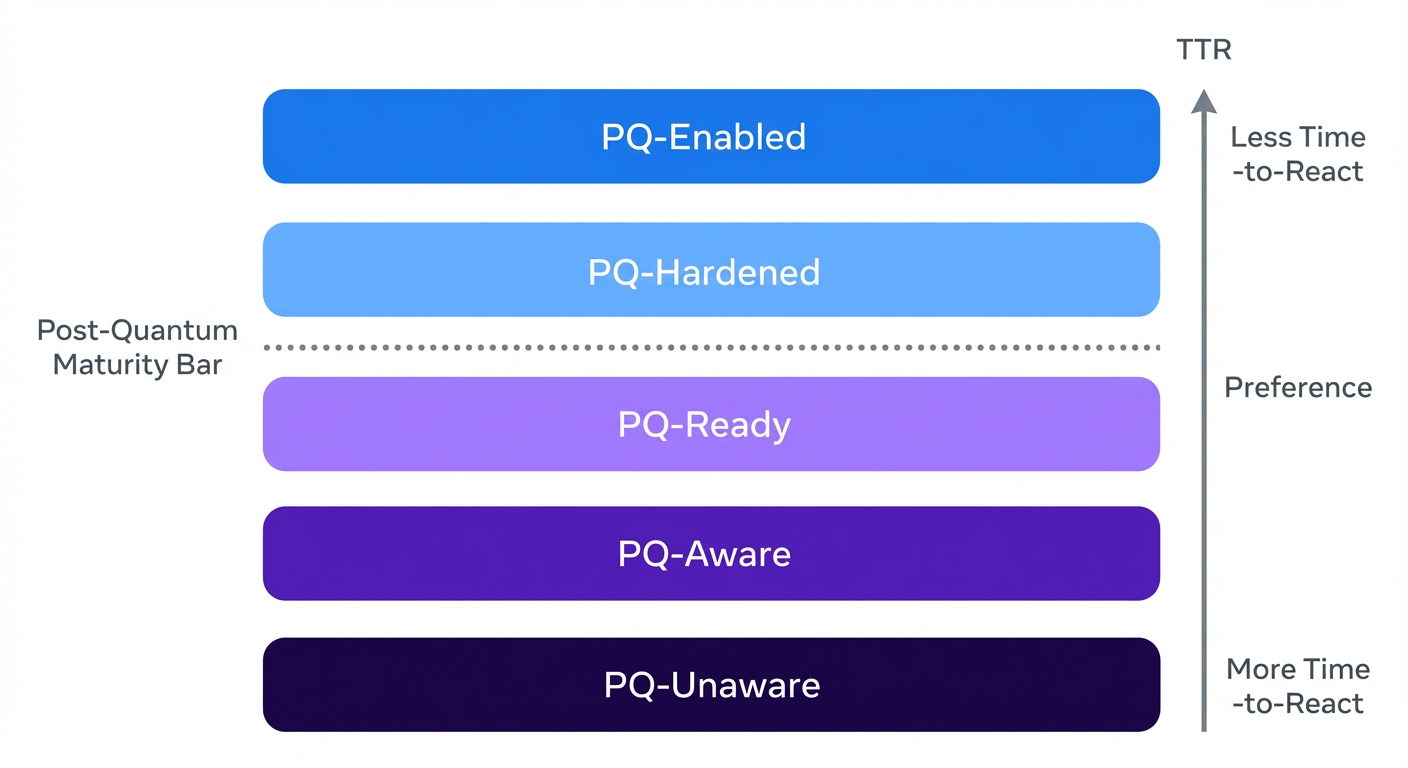
Because different teams and systems have varying risk profiles, complexity, and upgrade cycles, Meta proposes a concept of PQC Migration Levels. These levels help organizations categorize their use cases—from low-risk internal tools to high-impact customer-facing services—and assign appropriate migration priorities. For example:
- Level 1: Inventory & Assessment – Catalog all cryptographic assets, identify quantum-vulnerable algorithms.
- Level 2: Risk Classification – Determine which systems are most exposed to SNDL and legacy threats.
- Level 3: Pilot Deployment – Test hybrid or pure PQC implementations in controlled environments.
- Level 4: Wide Rollout & Guardrails – Deploy at scale while maintaining fallback mechanisms and monitoring performance.
This structured approach enables teams to manage complexity and avoid a one-size-fits-all migration, which would be impractical given the diversity of modern infrastructure.
From Risk Assessment to Guardrails: The Meta Process
The migration was executed through a clearly defined pipeline:
- Risk Assessment – Each system was evaluated for its quantum exposure, considering data longevity and the likelihood of SNDL attacks.
- Inventory – A comprehensive registry of cryptographic keys, certificates, and protocol endpoints was built.
- Selection of PQC Algorithms – Based on NIST standards and the specific needs of each use case, algorithms such as ML-KEM and ML-DSA were chosen. For some services, hybrid deployments (combining traditional and PQC) were used to ensure backward compatibility.
- Deployment – Rolling updates were performed with careful performance benchmarking, since PQC algorithms often have larger key sizes and computational overhead.
- Guardrails & Monitoring – Post-deployment, Meta established automated checks to detect failures, fallback conditions, and performance regressions. These guardrails ensure that security posture remains strong even as the infrastructure evolves.
Key Lessons and Takeaways
Collaboration Accelerates Progress
Meta’s involvement in co-authoring the HQC algorithm demonstrates that cryptographic advancement is a community effort. Sharing early experiences—including successes and pain points—helps shorten the learning curve for everyone. Organizations should consider participating in standards bodies or open-source implementations to both contribute and benefit from emerging best practices.
Managing Complexity Through Phased Migration
One of the biggest challenges is the sheer diversity of cryptographic usage across a large organisation. The PQC Migration Levels framework proved invaluable in breaking down the work into manageable chunks. Smaller teams often tried to treat migration as a single “big bang,” which leads to integration failures; Meta’s experience suggests that a gradual, level-based rollout significantly reduces risk.
Performance vs. Security Trade-offs
PQC algorithms are not drop-in replacements—they require more bandwidth and computational power. Early performance testing helped Meta set realistic expectations and optimise network configurations. Sharing these benchmarks (e.g., the impact of ML-KEM on TLS handshake times) can guide other engineers in capacity planning.
Conclusion: A Call to Action
The post-quantum future is not a distant concept; it is already influencing how we protect data today. Meta’s journey shows that proactive migration is feasible, even at global scale. By adopting a level-based approach, investing in inventory and risk assessment, and embracing industry standards, any organization can begin its own migration. The window for preparation is narrow, but with shared knowledge and collaborative effort, we can build a resilient digital foundation for the quantum age.
For further reading, see our discussions on SNDL threats and PQC Migration Levels, or explore NIST’s latest guidance.