A Surprising Snag in Routine Sampling
NASA's Curiosity rover has been exploring the surface of Mars since 2012, drilling into rocks to collect samples for analysis. But in late April 2026, a routine drilling operation turned into a delicate engineering challenge. After extracting a sample from a rock nicknamed "Atacama", the rover's robotic arm inadvertently pulled the entire rock off the surface. The rock remained stuck on the drill for several days before engineers managed to shake it loose.
The Incident: A Rock That Wouldn't Let Go
The drama began on April 25, 2026, when Curiosity drilled a hole into the Atacama rock. Normally, the drill's rotation and vibrations help detach the rock after sampling. However, this time, when the rover retracted its arm, the rock came with it — clinging to the drill bit. Over the next few days, engineers at NASA's Jet Propulsion Laboratory (JPL) in California commanded the rover to reposition the arm and activate the drill's vibration mechanism in an attempt to dislodge the rock. The process required careful planning to avoid damaging the sensitive equipment.
Success After a Week of Effort
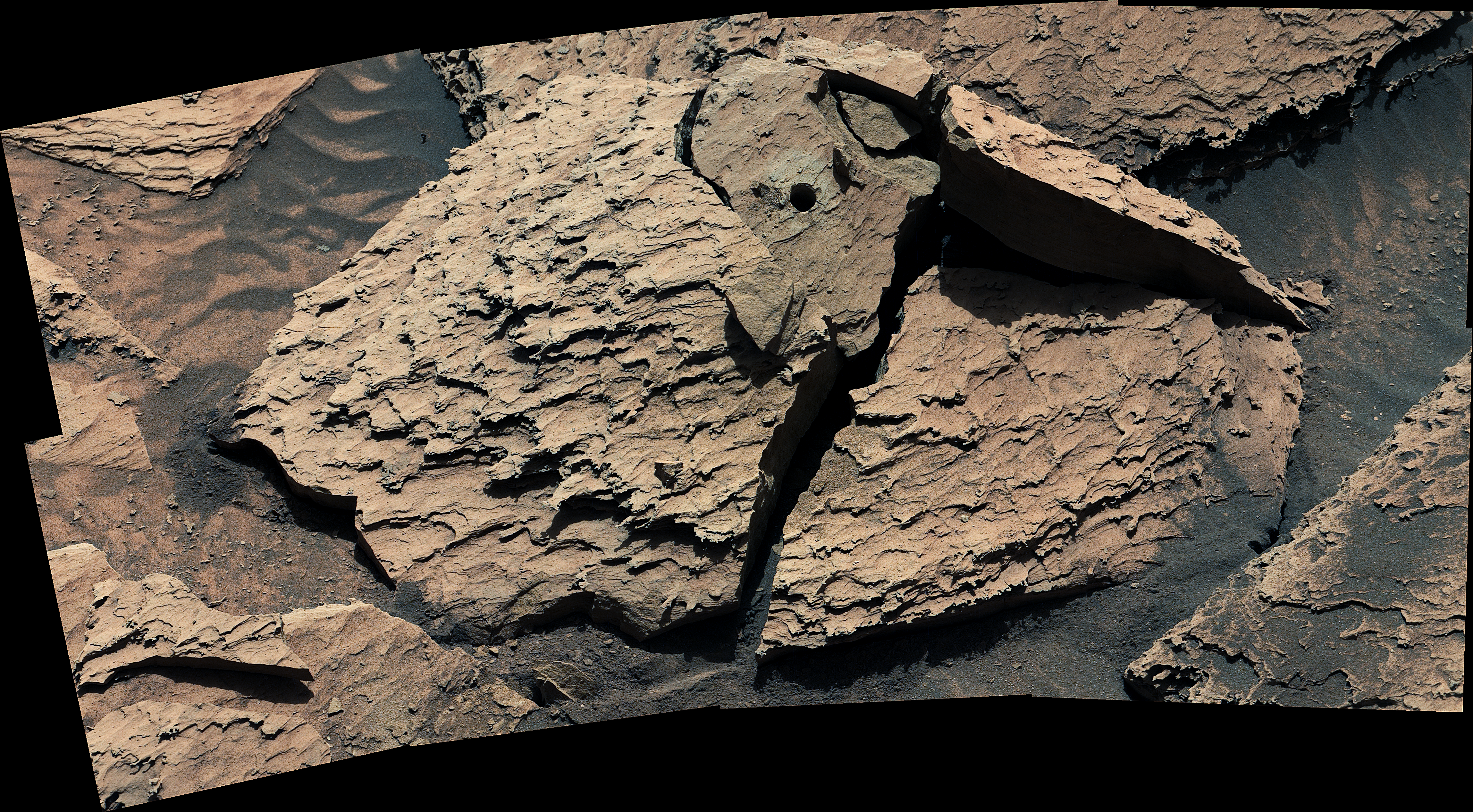
On May 1, the rock finally detached. As it fell, it broke into several pieces, revealing fresh surfaces that could provide additional scientific insight. The event was captured by Curiosity's Mast Camera (Mastcam) on May 6, providing a close-up view of the now-fractured Atacama rock.
Meet Atacama: The Stubborn Martian Rock
Atacama, named after the famous desert in Chile, is estimated to be about 1.5 feet (45 cm) in diameter at its base and 6 inches (15 cm) thick. On Earth, it would weigh roughly 28.6 pounds (13 kg) — but on Mars, where gravity is about one-third that of Earth, it would weigh only about 9.5 pounds (4.3 kg). The circular drill hole, about 0.6 inches (1.6 cm) in diameter, is clearly visible in the Mastcam image.
Why This Rock Mattered
Drilling into rocks like Atacama allows Curiosity to analyze their mineral composition, helping scientists understand the geological history of Mars and whether conditions ever supported microbial life. The fact that the rock broke upon falling also offers a rare chance to study its interior without additional cutting.
Lessons Learned for Future Missions
This incident highlights the unpredictable nature of working with a robot on another planet. Engineers had to adapt their plans in real time, using the rover's on-board tools creatively. According to a JPL statement, the team was pleased with the outcome, noting that the rock's removal did not affect the rover's instruments and that the extra data from the broken pieces could be a bonus. Such challenges are common in Mars exploration — recall the earlier drilling issues Curiosity faced in 2017, when a mechanical fault halted drilling for over a year.
What's Next for Curiosity?
Curiosity continues to explore the foothills of Mount Sharp, a 3-mile-high mountain within Gale Crater. The rover's next targets include layered sedimentary rocks that may hold clues to ancient water activity. Meanwhile, its successor, Perseverance, is collecting samples for eventual return to Earth — a mission that will benefit from every lesson learned by its predecessor.
For more details on the Atacama rock and the drilling procedure, see the original NASA image release.